






Mustard Oil in Pakistan: How to Choose Clean, Cold-Pressed Sarson Ka Tel
A visible machine, dark colour or low price cannot tell you the whole story. Here is how to judge the seed, equipment, hygiene, filtration, packaging and traceability behind the bottle—and choose a milder oil your family can cook with comfortably.

The answer in 30 seconds
If you want mustard oil for cooking, do not judge it only by a strong smell, blackish colour, a machine displayed at a shop or the lowest price. Ask a better question: can the seller explain and show what happened from seed selection to the sealed bottle?
Arabian Farms positions its mild cold-pressed mustard oil around selected desi seed, grading, moisture control, single low-RPM pressing, no added water or extraction chemicals, food-contact stainless-steel handling, staged settling and filtration, controlled storage and hygienic filling. That is the commercial difference this guide helps you evaluate.
Visible is not traceable
Seeing an expeller does not identify the seed, oil source, storage tank or previous handling.
Dark is not a purity certificate
Colour and pungency vary. Neither can confirm purity, freshness or hygienic processing alone.
A sealed bottle is a starting point
Look for a label, batch identity, manufacturer details, date, intended use and accountable support.
“Gali wali machine ka tel” may look fresh—but what does the machine prove?
For many Pakistani buyers, oil pressed in front of them feels more trustworthy. The instinct is understandable: you can see a machine and may smell fresh mustard. But the visible press is only one moment in a much longer food chain.
The machine cannot, by itself, tell you whether the seed was clean, how moisture was managed, what oil touched before and after pressing, whether the tank was covered, whether an earlier oil was mixed into the supply, or whether the bottle can be traced to a batch.
Dust, stones, weak seed, old stock and mixed lots are not always visible to the buyer.
The chamber, tray, pipe, filter, tank, filling tool and bottle all form the food-contact path.
Open containers, heat, light, insects and repeated handling can add uncertainty after pressing.
A batch code and accountable manufacturer make a complaint or quality check more meaningful.
Compare the process—not just two bottles
Use this table when comparing packaged cold-pressed oil with loose or unsealed oil whose supply chain is unclear.
| What to check | Controlled, traceable process | If the source is unclear |
|---|---|---|
| Seed preparation | Selection plus documented cleaning, sorting and grading before pressing. | You may not know whether dust, stones, light impurities or weak seeds were removed. |
| Pressing method | Defined press speed, temperature observation and a stated policy on water, chemicals and repeat pressing. | The visible machine does not establish what was pressed earlier or whether outside oil entered the supply. |
| Food-contact path | Identified seed chamber, trays, pipes, filters and tanks that can be cleaned through an SOP. | Material, corrosion condition, cleaning method and previous use may be difficult to verify. |
| Purification | Settling, stabilization and filtration steps are explained without pretending the oil is chemically refined. | Blackish appearance or heavy sediment may be accepted as “natural” without a process explanation. |
| Storage and filling | Covered storage, controlled filling, clean bottles, caps, labels and reduced open handling. | Oil may pass through open utensils or anonymous containers before reaching you. |
| Accountability | Manufacturer identity, pack details, batch information, customer support and applicable food documentation. | If the source is anonymous, investigation, return and corrective action become harder. |
This is a buyer’s due-diligence framework, not an allegation about every local oil seller.
Inside Arabian Farms: from selected seed to a sealed bottle
Quality cannot be added at the label-printing stage. It has to be designed into each handover point. Arabian Farms uses the following process for mustard and its other seed oils; olive oil is separately sourced from Spain.
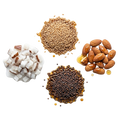
Selected desi mustard seed
Arabian Farms prefers mustard from South Punjab and selects suitable desi seed lots. We do not describe the seed as certified organic.
Customized high-capacity grading
Seed passes through a customized grader designed to remove dust and stones, blow out light impurities and separate undersized or weak seeds.
Moisture check and controlled feeding
Seed moisture is maintained below 10% for this process. No water or added moisture is used before extraction. An automatic lifter feeds and distributes seed across the press line.
Single low-RPM press
Oil is extracted once through a mechanical low-RPM press, without extraction chemicals or deliberately applied heat. The machine panel displays room and oil-extraction temperatures.
Settling, stabilization and cloth filtration
Raised discharge points in collection trays leave heavier seed material behind. Oil then moves through stabilization stages and multi-plate cotton-cloth filtration until the intended clarity is achieved.
Controlled storage, filling and sealing
Oil is stored in food-contact stainless-steel tanks. New bottles are cleaned with hot air before automated filling, capping and labelling, with limited direct handling.
The strongest future proof will be concise, genuine footage—not stock photography. One continuous sequence should show seed entering the grader, rejected impurities, the dashboard, first-pass extraction, settling trays, filtration, covered storage and the filling line.
Why does Arabian Farms mustard oil taste and smell milder?
Pungency is influenced by mustard variety and naturally occurring flavour compounds. Process conditions also shape what reaches your kitchen. Arabian Farms’ mild profile is produced through a controlled combination—not by deodorising or chemically refining the oil.
Qualitative sensory positioning—not a laboratory pungency score. A milder aroma is not, by itself, proof of purity or lower erucic acid.
For salan, daal, sabzi, bhujia and tadka, you can start cooking without the traditional pre-heating step used mainly to soften a very strong raw mustard aroma. For achaar recipes where sharp pungency is part of the expected result, a stronger traditional oil may suit your taste better.
Is blackish mustard oil more original?
Not necessarily. Mustard variety, natural pigments, fine seed material, filtration, age, light exposure and storage can all influence appearance. A very dark oil may be traditional, lightly filtered, old or poorly handled—but colour alone cannot tell you which explanation is correct.
Do not use colour as a home laboratory
Golden, amber or dark oil can each be genuine. Purity, rancidity and adulteration require suitable analysis; smell and colour are screening observations, not final proof.
If you are searching “how to check pure mustard oil at home,” use the label and supply chain first: edible-use declaration, sealed packaging, manufacturer details, batch/date information, storage guidance and responsive customer support. Punjab Food Authority itself lists work on detecting rancidity in mustard oil—an important reminder that meaningful conclusions require an appropriate method.
What should “cold-pressed mustard oil” actually tell you?
The international Standard for Named Vegetable Oils, maintained by the UN Food and Agriculture Organization and World Health Organization, describes cold-pressed oils as oils obtained by mechanical procedures without the application of heat; settling and filtering are permitted. This describes extraction and purification. It does not automatically prove organic farming, perfect hygiene, low erucic acid or suitability for every medical condition.
The phrase can establish
- Mechanical rather than solvent extraction
- No deliberate heat application during extraction
- Settling and filtration can still be used
- The oil remains distinct from fully refined oil
You should still verify
- Seed source, cleaning and moisture control
- Equipment, storage and filling hygiene
- Food-business and product documentation
- Any special composition or health claim
One oil does not need to do every job in your kitchen
A sensible rotation is about taste, cooking purpose, moderation and overall dietary balance—not turning one oil into medicine.
When you want sarson character
Use modestly for salan, daal, sabzi, bhujia, tadka and recipes where mustard flavour belongs. Choose mild or pungent according to your family’s taste.
When you want a neutral, low-erucic category
Canola is defined as low-erucic rapeseed-family oil. It can alternate with mustard when you want less mustard character.
Compare Arabian Farms canola oilChoose evidence, not only the seed name
Use deep frying less often, choose an oil with product-specific high-heat guidance, control the temperature and avoid repeatedly reusing degraded oil.
Erucic acid: keep the concern in perspective
Erucic acid is naturally present in mustard and some rapeseed-family oils. It is not removed by cold pressing, settling, filtration or household pre-heating. High-dose animal studies created a legitimate regulatory concern, while EFSA reported inadequate human data for a direct dose-response assessment.
EFSA derived a tolerable daily intake using an animal no-observed-adverse-effect level and a 100-fold uncertainty factor.
A general guide cannot calculate your exposure without knowing the oil’s measured composition and how much total erucic acid you consume.
Use oil in moderation, vary your dietary fat sources and choose canola when a defined lower-erucic category is your priority.
This is a total dietary exposure value—not a recommended serving and not an Arabian Farms product test result.
If you have diagnosed heart disease, high cholesterol, take cardiac medicines or follow a prescribed diet, ask your doctor or dietitian which oils and quantities fit your complete diet.

Mild cold-pressed mustard oil for everyday Pakistani cooking
Review live PKR prices, available bottle sizes, delivery, returns and the current product information before deciding. Start with the smallest practical pack if you are changing from a strongly pungent sarson ka tel.
View current mustard oil sizes and prices Find an Arabian Farms outletMustard oil questions Pakistani buyers frequently search
Which is the best mustard oil in Pakistan?
There is no reliable “best” answer based only on colour, aroma or advertising. Compare edible-use labelling, seed preparation, extraction method, food-contact equipment, storage, sealed packaging, batch identity, applicable registration and accessible customer support.
What is the mustard oil 1 litre price in Pakistan?
Prices change with seed cost, pack size, filtration, packaging, delivery and promotions. Use the Arabian Farms product page for the current 1-litre PKR price rather than relying on a number that may become outdated.
How can I identify pure mustard oil at home?
No single colour, smell, freezing or stain test can prove purity. Treat home checks as observations only. A sealed, traceable supply chain and suitable laboratory analysis are stronger evidence when adulteration or rancidity is in question.
Does mild mustard oil mean it is mixed or refined?
No. Mildness alone does not prove mixing, and strong pungency does not prove purity. Mustard variety and process conditions affect aroma. Arabian Farms uses selected seed, moisture below 10%, no added water, single pressing, settling and filtration for its mild profile.
Is black mustard oil more pure?
Not necessarily. Natural pigments, fine seed material, filtration, age, light and storage can influence colour. Blackish, amber or golden appearance cannot authenticate oil without additional evidence.
Are kachi ghani and cold-pressed mustard oil the same?
The terms are often used together in South Asia, but the reliable question is what the producer actually does. Cold-pressed should mean mechanical extraction without deliberately applied heat; ask separately about seed cleaning, temperature monitoring, pressing, filtration and storage.
Must mustard oil be heated before cooking?
Many households pre-heat strongly pungent mustard oil mainly to soften its raw aroma. Arabian Farms’ version is designed to be milder and ready to cook without that flavour-management step. Follow your recipe and avoid deliberately smoking any oil.
What about erucic acid and heart health?
Erucic acid is a real regulatory consideration, but direct human dose-response evidence is limited. Cold pressing does not remove it. Use oils moderately, vary fat sources, consider canola when lower erucic acid is your priority and follow medical advice for an individual heart condition.
Can cooking mustard oil also be used for hair or massage?
Use the product according to its label and intended purpose. This guide concerns edible mustard oil for cooking; traditional external use does not replace dermatological advice, and a patch test is sensible for sensitive skin.
How should cold-pressed mustard oil be stored?
Keep the bottle tightly closed in a cool, dry place away from direct sunlight and heat. Avoid introducing water or used utensils, follow the labelled shelf life and contact the manufacturer if odour or appearance changes unusually.
Evidence and standards consulted
- Punjab Food Authority: product registration, analysis and claim evidence
- Punjab Food Authority R&D: fats, oils, rancidity and adulteration work
- FAO/WHO: international Standard for Named Vegetable Oils
- European Food Safety Authority: erucic acid in feed and food
- World Health Organization: healthy diet and dietary-fat guidance
- Peer-reviewed research: water and temperature conditions affecting mustard pungency-compound release
Arabian Farms process details are based on production information supplied by management. Product-specific laboratory or certification claims should be published only with the current approved document.